
Stock market declines have continued into the final parts of the year, and the Invesco Nasdaq Trust ETF (QQQ) has lost 8.30% of its value over the last month. These moves have taken many investors by surprise because they have come after the technology sector has posted some of its move incredible rallies in history. Have the technology stocks reached a top? Could we be seeing another “tech bubble” in the equities benchmarks? These are important questions for investors to be asking. But when we look at the quarterly performance results this earnings season, it looks as though perception has disconnected from reality. In many instances, the companies which represent the core holdings of QQQ have surpassed analyst estimates for earnings. The combination of each of these events suggests our valuations in tech stocks have reached a negative extreme and that our sound fundamental footing could push instruments like QQQ much higher in the weeks ahead.
(Source: ETF.com)
The Invesco Nasdaq Trust is a well-diversified fund with an expense ratio of 0.20%. The fund is heavily centered around the technology sector (at 61.33%), but allocations in consumer cyclicals (21.04%), and healthcare (9.10%) round out the top three positions and help bring some added level of sector diversification for those holding positions in QQQ.

(Source: ETFdb.com)
Negative reactions in tech have become visible in the outflows which have been directed toward the fund during the short-term time horizon. Over the last week, outflows of $278.3 million have impacted the fund. This number expands to $530.2 million when we look at the QQQ outflows visible over the last four weeks. These trends are troublesome, and the indicate weakening sentiment with respect to tech stocks and the core holdings of QQQ.
(Source: ETFdb.com)
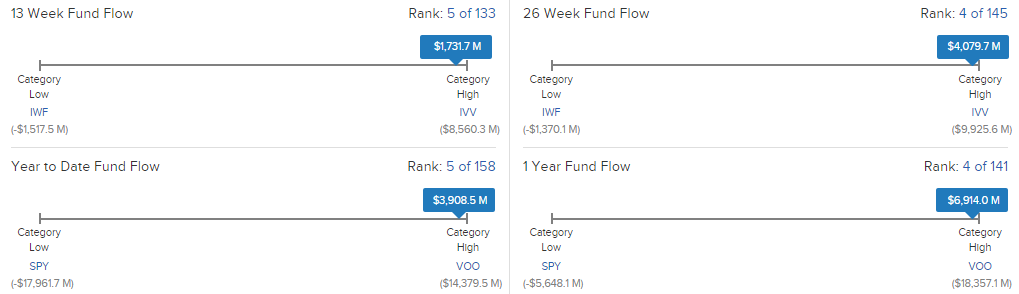
But is this reason enough for QQQ bulls to worry? It may come as a surprise to know that these trends do not match the longer-term view. Over the last 13 weeks, the fund has benefited from inflows of $1,731.7 million and this number expands to $4,079.7 million over the last half-year period (26 weeks). These encouraging trends continue when we view QQQ from a one-year perspective, which shows the benefit of inflows valued at $6,914.0 million.
Of course, it can be argued that we are now witnessing a true bearish reversal of these longer-term trends. But, in order to validate this negative perspective, we will need to see substantial earnings misses in the core holdings of QQQ before we can hope to justify the recent selling pressure which has become visible in the fund.
(Source: Author)
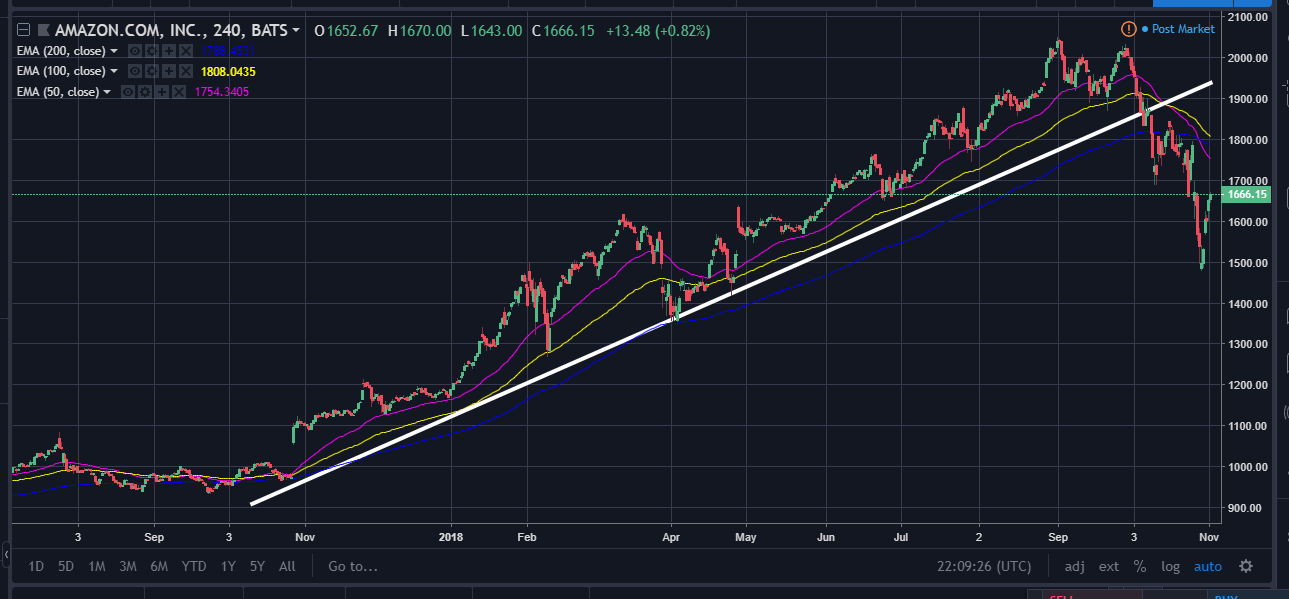
To explain the downside activity seen recently in QQQ, share values in Amazon (AMZN) have risen to prominence as a central example. AMZN makes up 9.73% of the total holdings in QQQ, and the stock has fallen 18.38% over the last month. Surprisingly for many, share values of AMZN have actually breached the psychological level at $1,500 to hit near-term lows at $1,477.42. But, again, the short-term outlook fails to match the longer-term trends as the stock is actually showing YTD gains of 42.42% even when we include all of the recent volatility in share prices.
Fortunately, the company’s profit performances remain supportive. For the third quarter, Amazon posted earnings of $5.75 per share, which was nearly double the analyst expectation for the period ($3.14 per share). Even more surprisingly, Amazon showed total profits of $2.9 billion. This represents an annualized growth rate of 1,032.81% when compared to the profits generated during the third quarter of 2017 ($256 million).
(Source: Author)
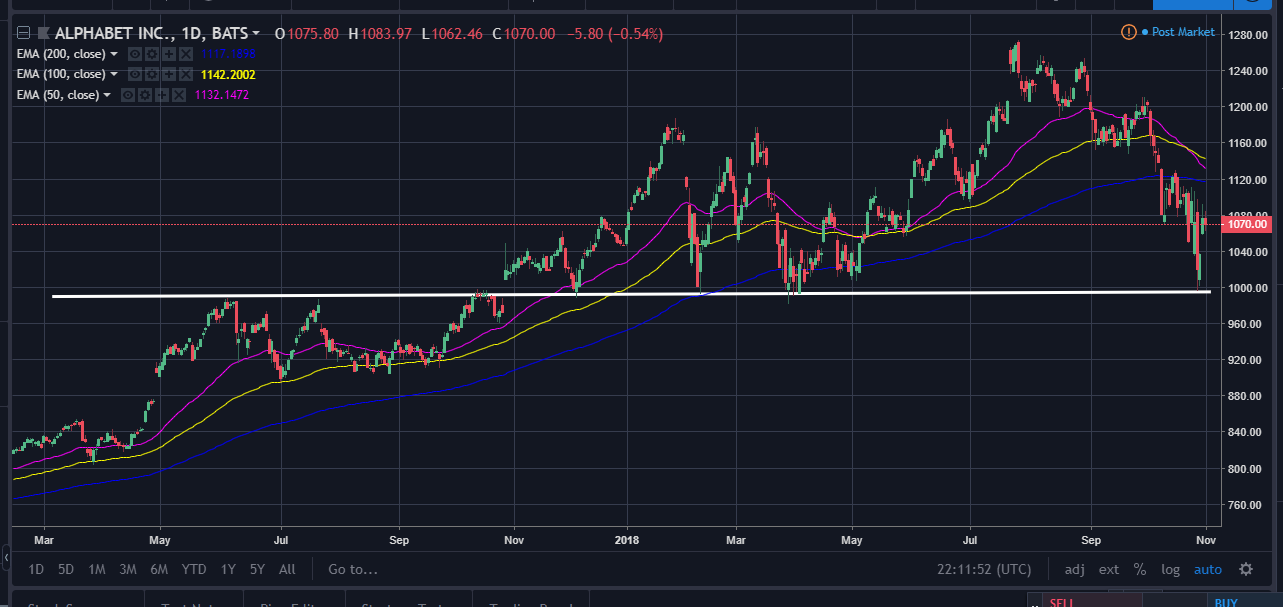
Another example of an apparently irrational market reaction can be seen in the recent market moves of Alphabet (GOOG) (GOOGL), which makes up a total of 8.77% of the QQQ holdings (when the Class A and Class C shares are combined). For the third quarter, Alphabet also beat analyst estimates with earnings of $13.06 per share (vs. expectations of $10.42 per share). The top-line figure was weaker than expectations, however, with revenues posting at $33.7 billion (while $34.04 billion was the consensus estimate).
But this “mixed” performance generated a decisively negative reaction, as Alphabet share prices are now trading lower by 10.42% over the last month. This heavy selling pressure has placed GOOG valuations in close proximity to another key psychological level at $1,000 per share. So the broader market trends here have become relatively clear. Investors seem to be overlooking instances of strong earnings results to focus instead on the negatives (while acting in accordance with developing bearish momentum).
(Source: Author)
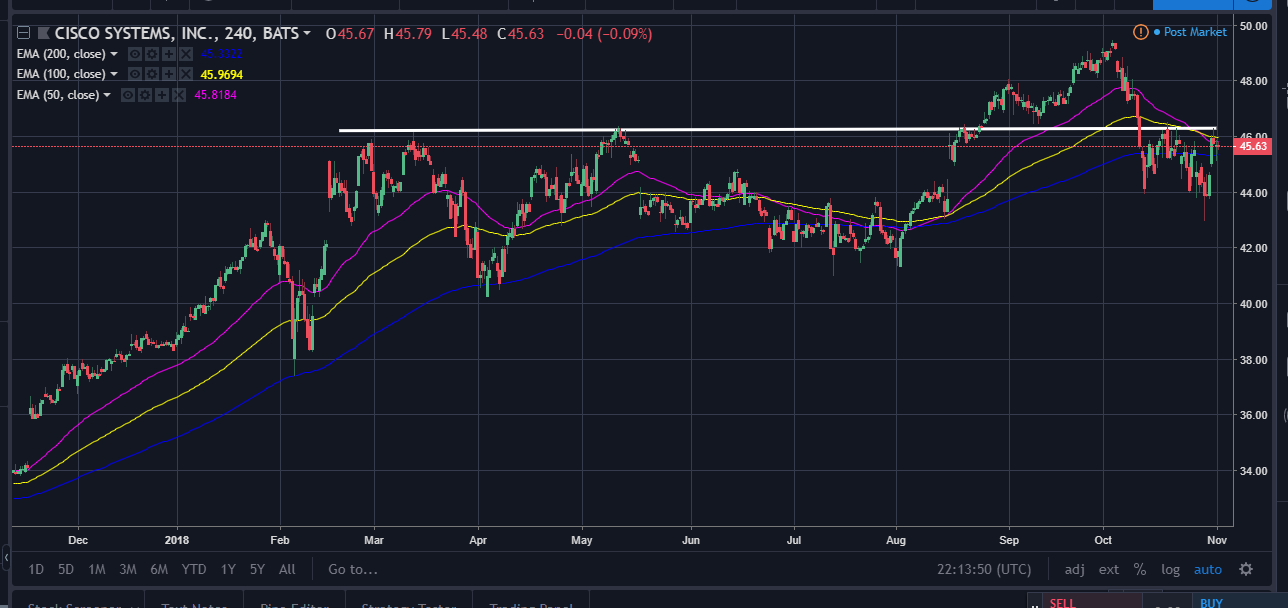
Tech investors may be asking themselves if these trends are likely to continue. But this seems unlikely given the underlying earnings strength which is visible in the core holdings of QQQ. The next important test will be seen when Cisco Systems (CSCO) reports earnings on November 14th. CSCO makes up 2.62%, and the company’s performances are often viewed as an indicator of the strength of the broader technology sector.
Cisco showed impressive earnings results during the fiscal fourth quarter, with profits of 70 cents per share (excluding items) and revenues $12.84 billion for the period. Cisco showed full-year revenue growth of 3%, while growth for the fourth quarter posted at 6% (on an annualized basis). Cisco is expected to show earnings of $0.66 per share for the fiscal first quarter, which would indicate annualized earnings growth of 20% (if realized). Over the last month, the stock is showing losses of 6.61%. But CSCO is still showing substantial gains of 19.19% on a YTD basis, which suggests the recent dip in valuations may be an opportunity to buy the stock at these weaker levels.
Overall, many of the core holdings in QQQ show evidence of earnings strength in recent quarters. This suggests the underlying fundamentals do not support the extreme selling pressure we have witnessed over the last few weeks. If share prices are able to continue on a path toward recovery, we could see substantial upside potential in the valuation of the fund. A simple reversion to the mean in these cases would indicate a solid possibility for gains generated from long positions in QQQ. Ultimately, this means technology investors with a long-term perspective have little reason to worry in the months ahead.
Thank you for reading. Please click the “Follow” button to receive more real-time investment alerts from Income Generator. If you found this article interesting (even though it may disagree with your position), please click the “Like” button at the top of the page.
Now, it’s time to make your voice heard. Reader interaction is the most important part of the investment learning process! Comments are highly encouraged. We look forward to reading your viewpoints on QQQ.
Disclosure: I am/we are long AMZN, GOOG, CSCO.
I wrote this article myself, and it expresses my own opinions. I am not receiving compensation for it (other than from Seeking Alpha). I have no business relationship with any company whose stock is mentioned in this article.
Be the first to comment