Introduction
The opportunities in closed-end funds over the last few months caught the eye of many investors. Most of these products are designed to provide a steady stream of income, usually on a monthly or quarterly basis, as opposed to the biannual payments provided by individual bonds. And this feature continues to attract market participants even when the overall market looks unstable.
In spite of CEFs being mostly of interest to income investors, we have found our path to approach them as active traders and we are constantly monitoring them. As a testament to this, you will be kept up to date with Weekly Reviews such as the one below.
The Benchmark
Over the past week, we saw a steep downturn in the high-yield sector. The price of the iShares iBoxx $ High Yield Corporate Bond ETF (NYSEARCA:HYG) fell by $1.14 and finished the week at $85.30.
The first days after the latest meeting of the Federal Reserve and the increase of the interest rates, we did not see any reflection on the prices in the sector. Nevertheless, it seems like the interest rate panic and the fears from the fast-rising yields obsessed the market and we saw a sell-off even in this sector. Of course, compared to the rest of the fixed-income sectors the situation around the high-yield CEFs is more favorable.
I would like to spend some time covering several advantages of high-yield bonds and closed-end funds, which invest in this asset class. As the high-yield sector generally has a low correlation to other sectors of the fixed-income market, along with less sensitivity to interest rate risk, an allocation to high-yield bonds may provide portfolio diversification benefits. In addition, high-yield bond investments have historically offered similar returns to equity markets but with lower volatility.
Source: Barchart, iBoxx $ High Yield Corp Bond iShares
Statistical Comparison And Spread Review Of The Sector
High-yield bonds are typically evaluated on the difference between their yield and the yield on the US Treasury bond. High-yield spreads are used by investors and market analysts to evaluate the overall credit markets. Higher spreads indicate a higher default risk in junk bonds, and can be a reflection of the overall corporate economy and/or a broader weakening of macroeconomic conditions.
On a weekly basis, we notice an increase of 0.04 bps and the current levels remain one of the lowest for the past decade.
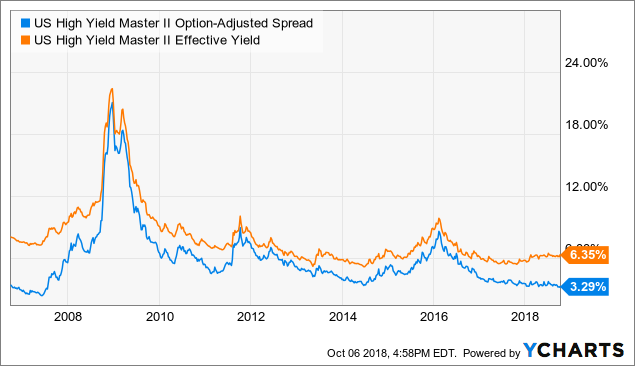 US High Yield Master II Option-Adjusted Spread data by YCharts
Source: YCharts, US High Yield Master II Option-Adjusted Spread and US High Yield Master II Effective Yield
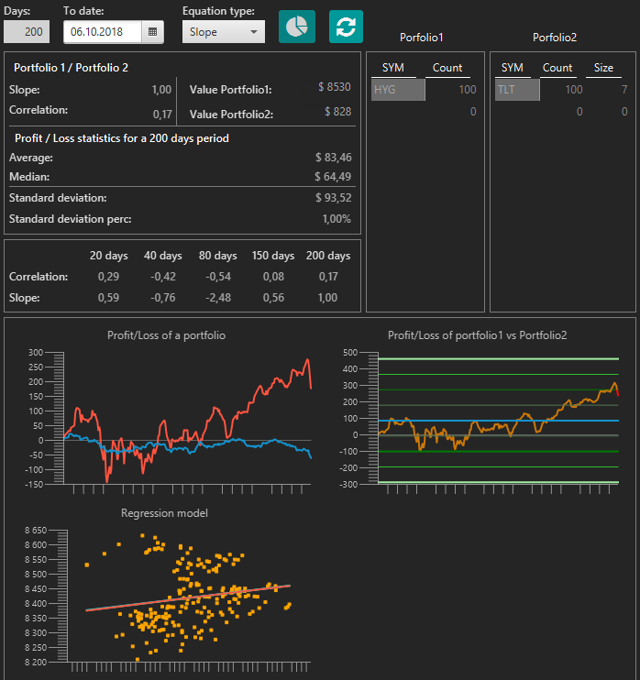
Below, you can find a statistical comparison between the iShares iBoxx $ High Yield Corporate Bond ETF and the iShares 20+ Year Treasury Bond ETF (NYSEARCA:TLT). As discussed, we observe a low correlation between the two sectors. It is only 0.17 points for the last 200-day period:
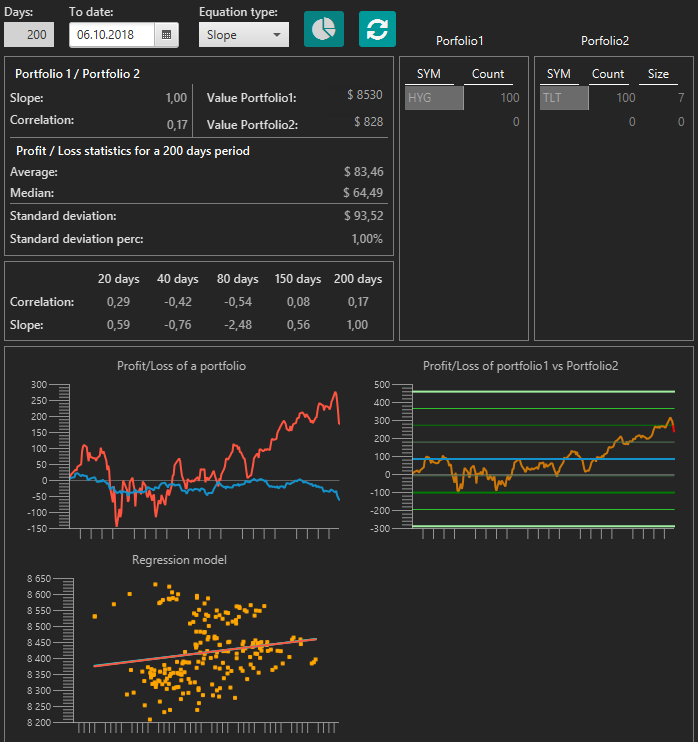
Source: Author’s software
The News
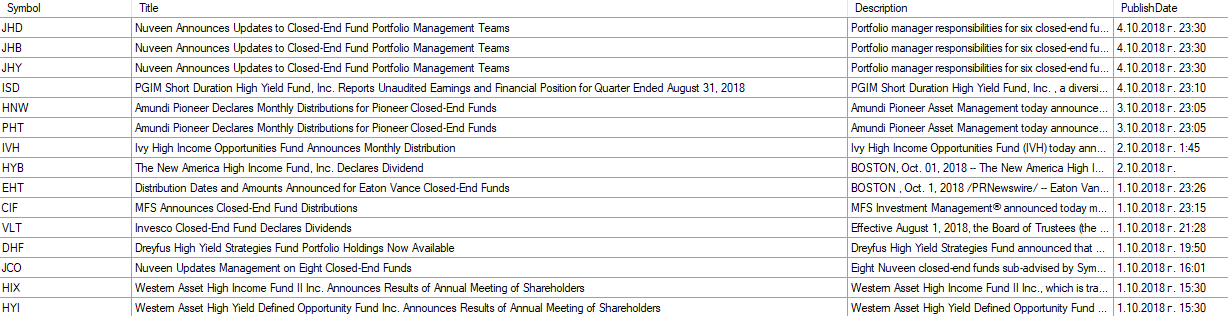
Source: Yahoo News, High Yield Closed-End Funds News
Above, you can find a summary of the most interesting news in the sector from the past week. In brief, we have several changes in the management teams and a bunch of funds which announced their regular dividends. There is no change in the funds’ dividends from their prior distribution rates.
- Invesco High Income Trust II (NYSE:VLT) $0.0964 per share.
- MFS Intermediate High Income Fund (NYSE:CIF) $0.0206 per share.
- Eaton Vance High Income 2021 Target Term Trust (NYSE:EHT) $0.0475 per share.
- New America High Income Fund (NYSE:HYB) $0.0550 per share.
- Ivy High Income Opportunities Fund (NYSE:IVH) $0.1000 per share.
- Pioneer High Income Trust (NYSE:PHT) $0.0650 per share.
- Pioneer Diversified High Income Trust (NYSEMKT:HNW) $0.0950 per share.
Review Of High-Yield CEFs
Weekly % Changes In The Sector
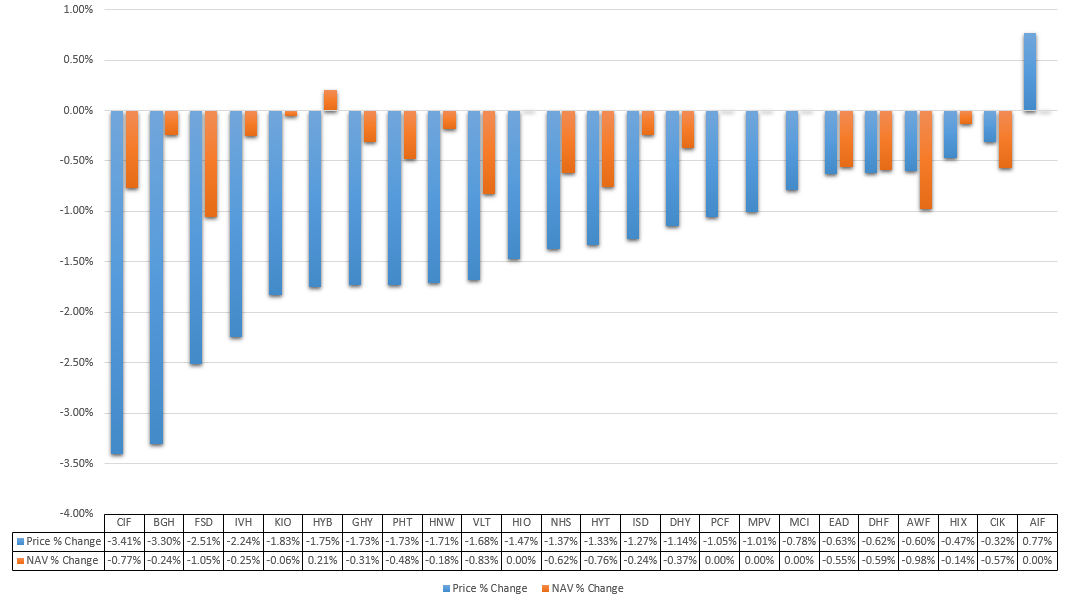 Source: CEFConnect.com
1. Lowest Z-Score:
Source: CEFConnect.com
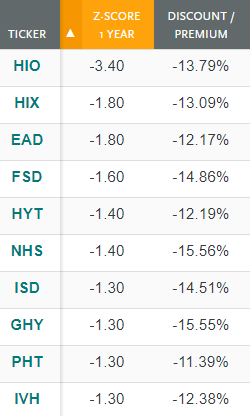
The first criterion that I am going to use is a statistical one. The Z-score indicator shows us how many times the discount/premium deviates from its mean for a specific period. By the value of the Z-score, we can figure out whether the fund is overpriced or undervalued. If we take into an account the sharp decline of the prices in the sector I do expect to see some reflection on the Z-score of the funds.
At first glance, I see that all of the participants have a Z-score less than -1.00 point. A fact which could be a reason to review some of them as potential “Buy” candidates.
No doubt, my attention was caught by the leader of the ranking and the only one obvious outlier of the sample. Western Asset High Income Opportunity Fund (NYSE:HIO) is traded at 13.79% discount and its Z-score is -3.40 points. There is no change in its net asset value on a weekly basis. I have not seen so low statistical value in the sector for a long time. Especially when we talk about a fund with a relatively high average daily volume of 320,000 shares. As an active trader, I am happy to see that there is a statistical reason to review this fund. Also, it is interesting to mention that it is one of the two non-leveraged funds from the sector.

Source: CEFConnect.com, Western Asset High Income Opportunity Fund
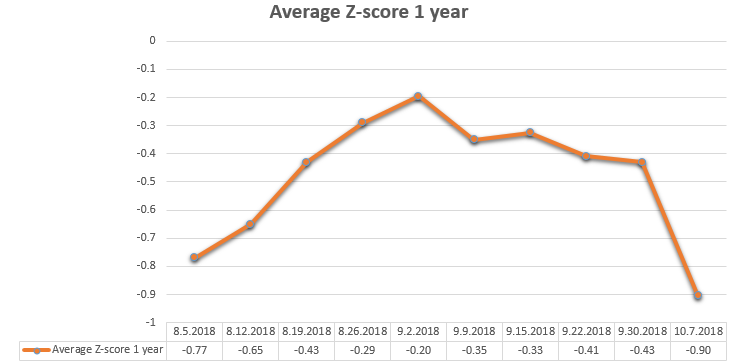
The average Z-score of the high yield CEFs is -0.90 point. A week ago, the average Z-score was -0.43 point. Definitely, a significant change on a weekly basis.
Source: CEFConnect.com
2. Highest Z-Score:
Source: CEFConnect.com
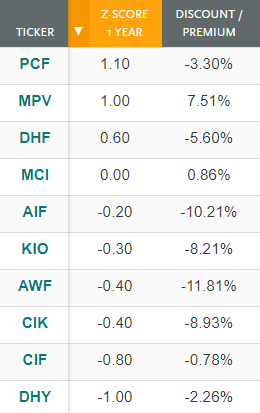
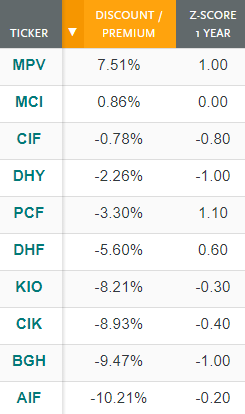
The tough week for the sector pushed down the Z-score of the funds and it is still difficult for me to include some of the funds to my potential “Sell” list. When the value of the Z-score is between 0 and 1 point, we do not find a statistical reason to short the closed-end funds. Furthermore, we would like to have candidates traded at a premium to review them as potential “Short” trades.
3. Biggest Discount:
Source: CEFConnect.com
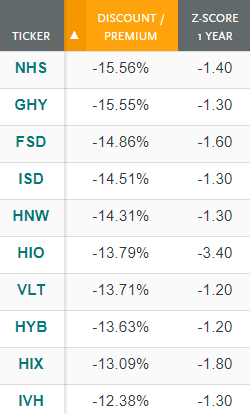
The current market environment has opened up many opportunities in the sector and we find at least a statistical reason to review them.
A Z-score less than -1.30 points, combined with a discount of more than 12%, sounds like a strong foundation for deeper research. Of course, before taking some position, you will need to go further with your analysis of the fund’s characteristics. Their liquidity is also an important factor for me. That is why I am more interested in Prudential Global Short Duration High Yield Fund, Inc (NYSE:GHY) and First Trust High Income Long/Short Fund (NYSE:FSD). Their average daily volume is high enough to meet my requirements.
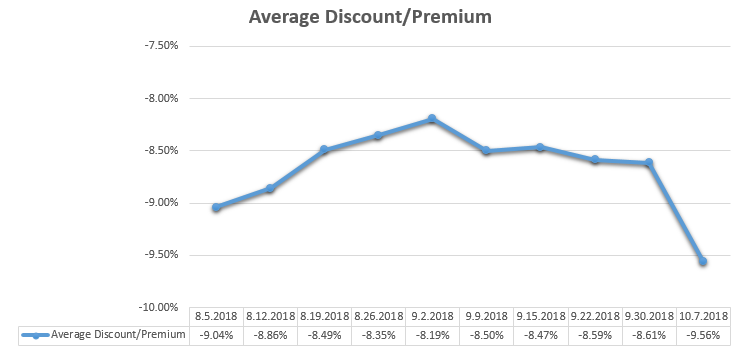
The average discount/premium of the high yield CEFs is -9.56%. Last week, the average spread between prices and net asset values was -8.61%.
4. Highest Premium:
Source: CEFConnect.com
My philosophy and respectively my strategy preach to be prepared for every possible outcome. Therefore, I strive to have a potential hedging reaction of each of my positions. The above sample provides with information about the funds with the highest premium in the sector. In case of some turbulence in the sector, I can use as a hedging reaction some of them. Dreyfus High Yield Strategies Fund (NYSE:DHF) is a very good option for example.
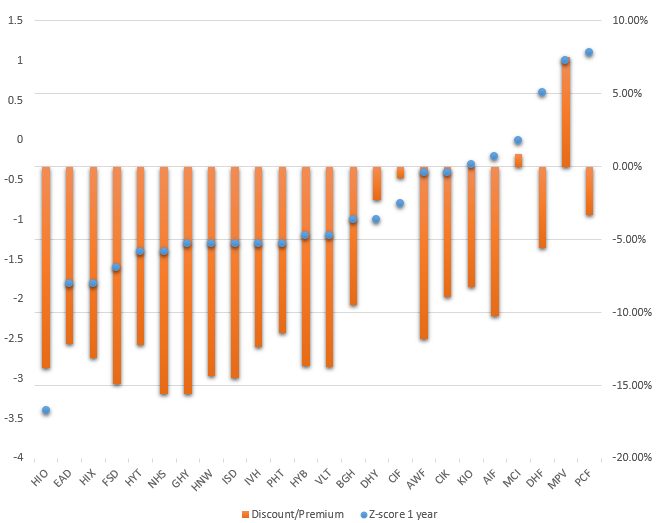
Here is the full picture of the funds from the sector. Below, we have depicted their discount/premium and their Z-score:
 Source: CEFConnect.com
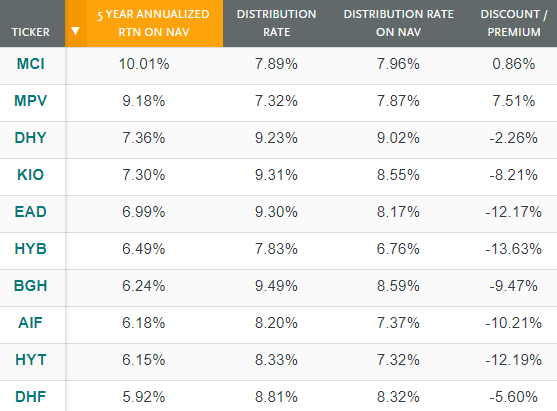
5. Highest 5-year Annualized Return On NAV:
Source: CEFConnect.com
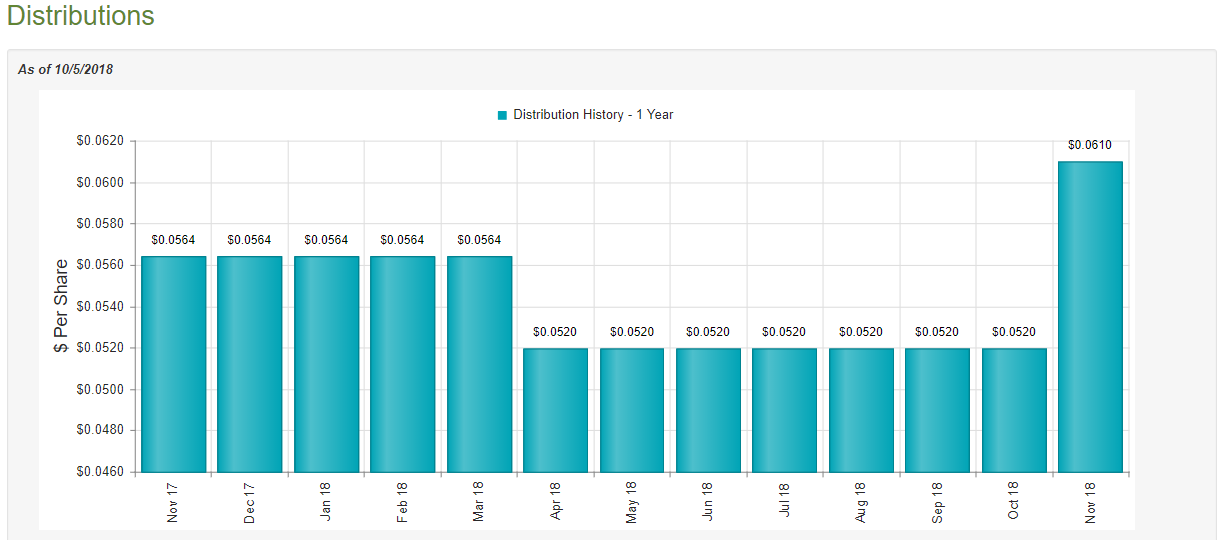
The average return for the past five years is 5.94% for the sector. As you can see, the current yields on price and net asset value are higher than the historical ones. This fact can be easily explained by the sharp decline in the prices at the beginning of the year. Currently, Wells Fargo Advantage Income Opportunities Fund (NYSEMKT:EAD) and New America High Income Fund (NYSE:HYB) are traded at a very attractive discount and may deserve your attention. Wells Fargo Advantage Income Opportunities Fund has declared a higher dividend for the month of November.
Source: CEFConnect.com, Wells Fargo Advantage Income Opportunities Fund
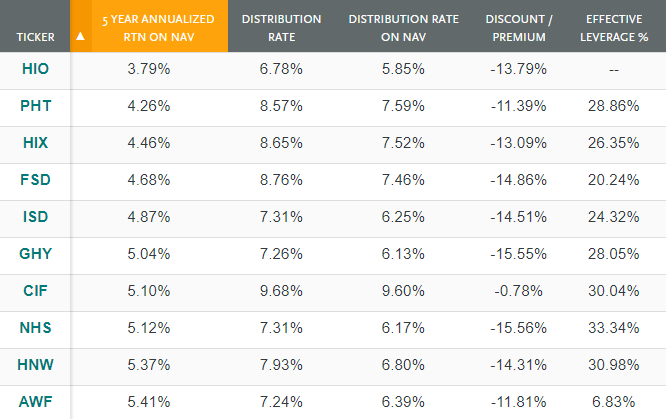
6. Lowest 5-year Annualized Return On NAV:
 Source: CEFConnect.com
Here, we have the closed-end funds with the lowest return on net asset value. If you are not a fan of the leveraged funds and the current interest rate panic bothers you, you may decide to review the Western Asset High Income Opportunity Fund (NYSE:HIO) or AllianceBernstein Global High Income Fund (NYSE:AWF).
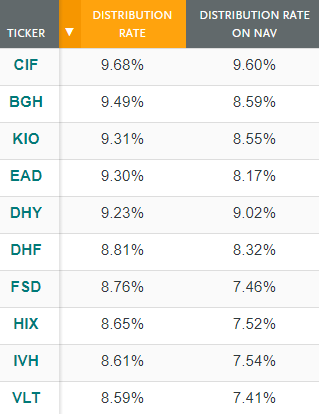
7. Highest Distribution Rate:
Source: CEFConnect.com
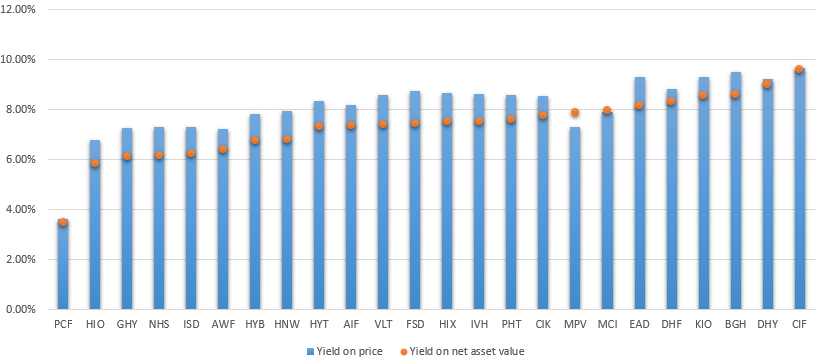
The average yield on price for the sector is 8.11% and the average yield on net asset value is 7.33%. We have already seen that most of the funds are trading at a discount, so this difference should not surprise us.
 Source: CEFConnect.com
8. Lowest Effective Leverage:
Source: CEFConnect.com
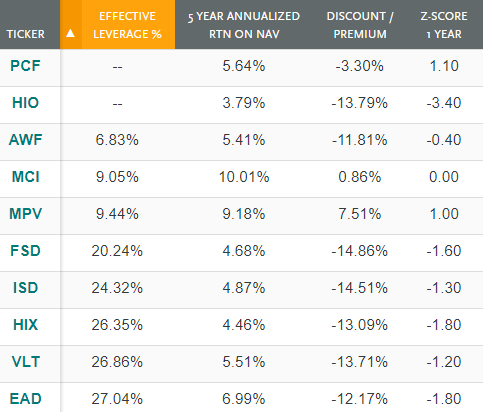
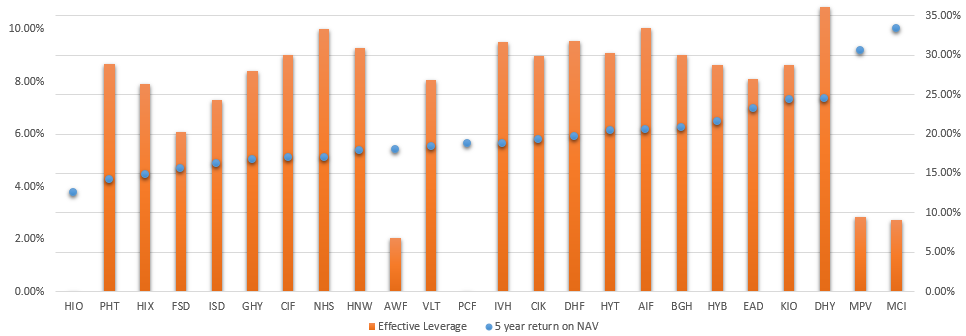
We have two funds which are not leveraged and three which use a leverage below 10%. The average leverage for the sector is 26.47%. Below, you can see the relationship between the effective leverage of the funds and their yield on net asset value for the past five years.
 Source: CEFConnect.com
Statistical Comparison And Potential Trades
The recent increase in the rates led to sell-off in the fixed income assets and some of the market analysts shared their opinion that too fast increase of the yields could affect the stock market, as well. A situation which we observed at the beginning of the year. Therefore, I have decided my weekly pick to be a fund which has a low effective leverage and to have a potential hedging reaction in case of market turbulence.
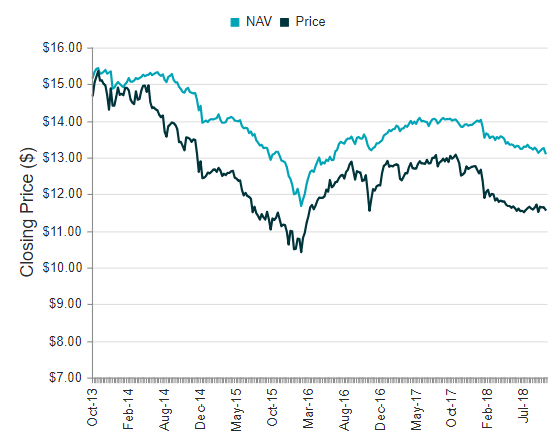
The CEF that I am going to review today is AllianceBernstein Global High Income Fund (NYSE:AWF). Currently, we find that it is traded at 11.81% discount. I believe most of us will consider as an important factor the coverage ratio which in our case is positive. The latest quarterly earning per share is $0.21 which perfectly matches the distribution rate per quarter. Another advantage of this fund is its effective leverage of only 6.83%. From the leveraged funds of the sector, AllianceBernstein Global High Income Fund has the lowest leverage percentage.
 Source: CEFConnect.com, AllianceBernstein Global High Income Fund
Source: CEFConnect.com, AllianceBernstein Global High Income Fund

Source: Fund Sponsor Website
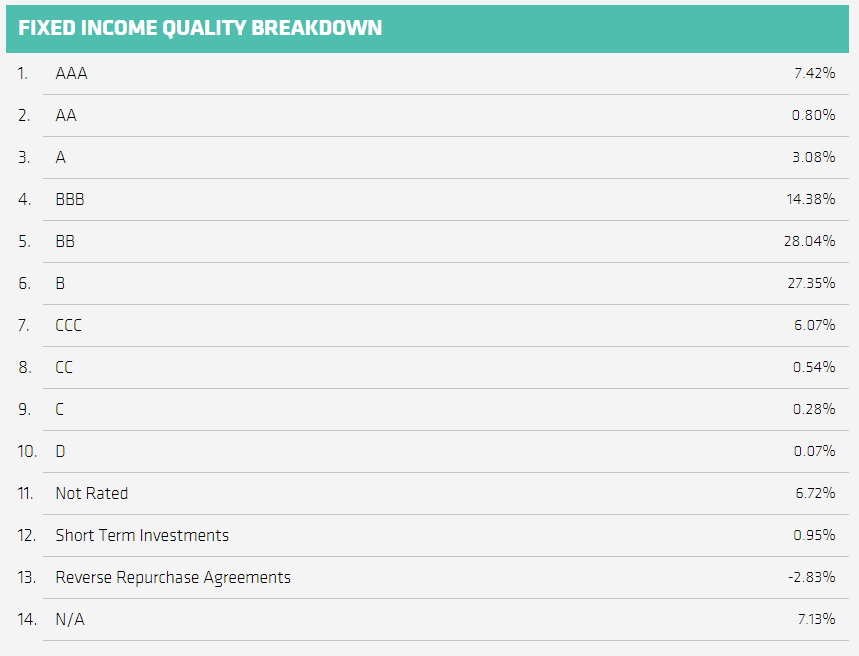
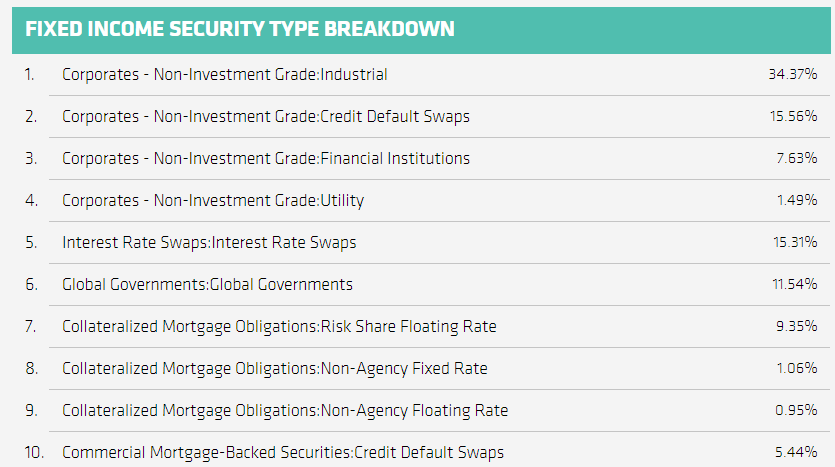
Most of the investments owned by this CEF are with rating “BB” and something that caught my attention are the 7.42% of the assets labeled as “AAA” quality. The portfolio is constructed by issuers located globally, but 67.55% of the assets are located in the United States. The number of holdings in the fund’s portfolio is 1285. The effective duration of the portfolio is 4.41 years.
 Source: Fund Sponsor Website
 Source: Fund Sponsor Website
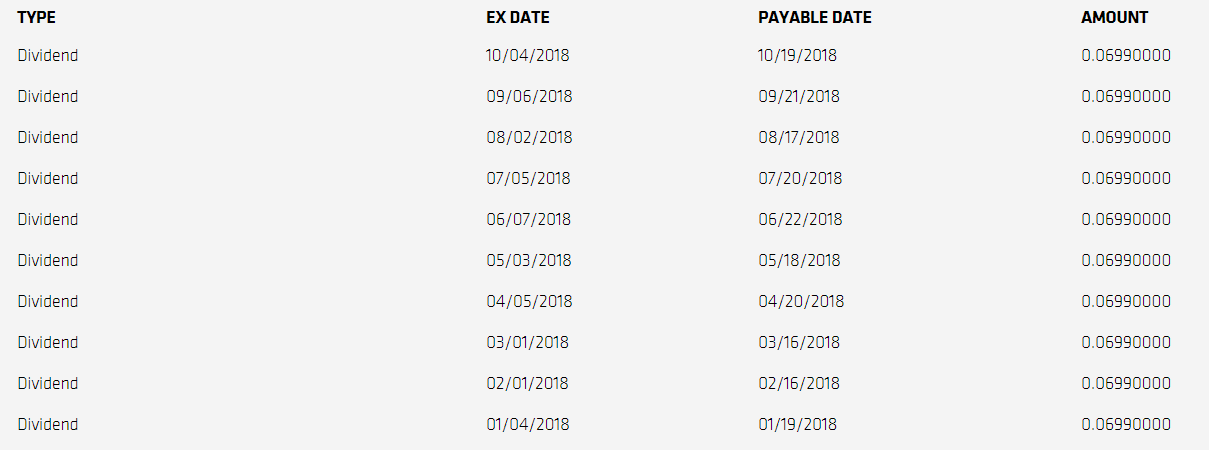
We do have a yield on the price of 7.24% and a yield on the net asset value of 6.39%. The current distribution is $0.0699, and it is paid on a monthly basis.
 Source: Fund Sponsor Website
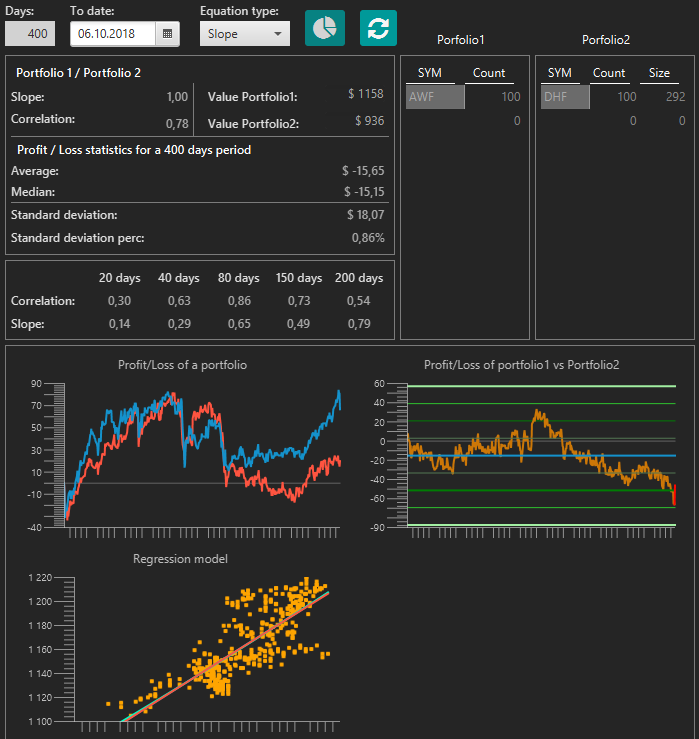
As a hedge to AWF, we can use DHF. The fund has one of the highest Z-scores in the sector and higher effective leverage.
 Source: Author’s software
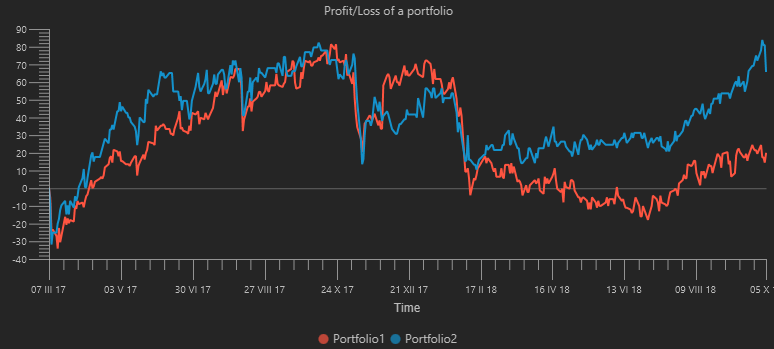 Source: Author’s software
Conclusion
The high-yield sector does not provide us with significant arbitrage opportunities at present. Most of the CEFs are traded at discounts and it is difficult to find reasonable “Short” candidates. If we see a break of the support or the resistance of the current trading range, we expect significant changes in the funds’ statistical characteristics.
Based on the data that I have reviewed, AWF can be a potential addition to your portfolio.
Note: This article was originally published for our subscribers on 10/07/2018, and some figures and charts may not be entirely up to date.
Trade With Beta
At ‘Trade With Beta‘ we also pay close attention to closed-end funds and are always keeping an eye on them for directional and arbitrage opportunities created by market price deviations. As you can guess, timing is crucial in these kinds of trades; therefore, you are welcome to join us for early access and the discussions accompanying this kind of trades.
Disclosure: I/we have no positions in any stocks mentioned, but may initiate a long position in AWF over the next 72 hours.
I wrote this article myself, and it expresses my own opinions. I am not receiving compensation for it (other than from Seeking Alpha). I have no business relationship with any company whose stock is mentioned in this article.
Be the first to comment