By Allison Lampert
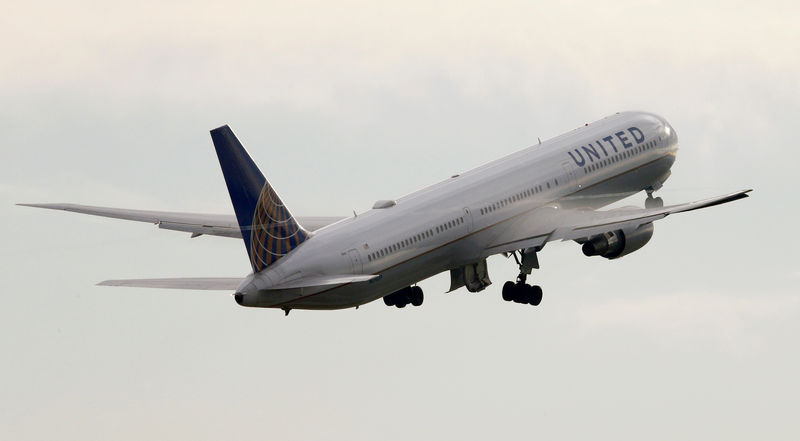
(Reuters) – United Airlines (O:) pilots said they refuse to budge on the wording of their contract governing the outsourcing of regional flights.
President of the U.S. No. 3 carrier, Scott Kirby, has called for changes to the so-called “scope clause” which sets guidelines on the size of planes that can be operated by regional feeder carriers, among other things.
A scope clause restricts planes heavier than 86,000 pounds (39,000 kg) with more than 76 seats from regional routes, where pilots are generally paid less than their mainline counterparts.
“We are holding the line,” said Todd Insler, chairman of the unit of the Air Line Pilots Association that represents United pilots. “We have no intention of degrading scope.”
The United negotiations are being watched by other airlines entering labor talks, along with commercial planemakers Embraer SA (SA:) of Brazil and Mitsubishi Heavy Industries Ltd (T:) of Japan, which are building new planes that are too heavy to be flown by regional carriers because they exceed the scope clause weight.
A United spokeswoman on Friday referred to earlier remarks by Kirby. Kirby has said changing the scope clause would make the carrier more competitive against rivals American Airlines (O:) and Delta Air Lines (N:).
Insler disagreed with that.
“We won’t use regional jets to disadvantage our mainline employees, pilots, flight attendants, anyone else,” Kirby told analysts at a conference earlier this month. “Having competitive scope, however, is really important to being the best. We can’t have one hand tied behind our back and try to compete with AA and Delta.”
Pilots have asked United to shift flights from regional carriers to the main airline because smaller carriers use less-efficient 50-seater planes and have faced problems recruiting pilots in a competitive market, according to Insler.
Major carriers have generally been reluctant to make regional flights part of the mainline operations, citing higher costs. “It’s very difficult to make those aircraft work at any mainline airline,” United Chief Financial Officer Gerald Laderman told analysts at a conference earlier this month.
Fusion Media or anyone involved with Fusion Media will not accept any liability for loss or damage as a result of reliance on the information including data, quotes, charts and buy/sell signals contained within this website. Please be fully informed regarding the risks and costs associated with trading the financial markets, it is one of the riskiest investment forms possible.
Be the first to comment