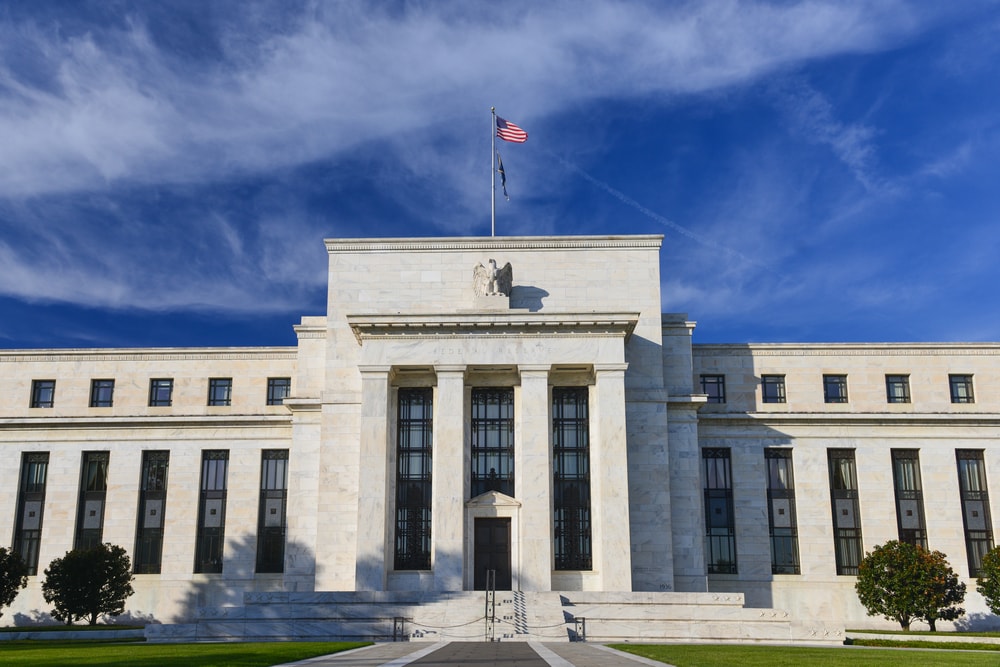
Believe it or not, officials at the Federal Reserve are discussing how the Federal Reserve should operate its monetary policy in “normal” times.
As explained by Nick Timiraos in the New York Times, “Federal Reserve officials are zeroing in on a strategy to end the wind-down of their $4 trillion asset portfolio…” and are contemplating how monetary policy will be conducted once the efforts to reduce the size of the Fed’s securities portfolio has been achieved.
Here it is not altogether clear what policy tools will be used going forward.
One major focus of Federal Reserve officials is the amount of bank reserves that are present in the banking system.
Right now, the reserve balances the Fed have put in the banking system is just over $1.6 trillion. This total had peaked at around $2.8 trillion in 2014.
Note, that just previous to the financial crisis in 2007, on October 31, 2007, these reserve balances totaled $14 billion. That’s correct…$14 billion, not trillion!
Another possible policy variable going forward would be interest rates.
The Fed’s policy rate of interest is the Federal Funds rate, the rate that one bank charges another bank to borrow reserves held at the Fed.
Before the Great Recession, the Federal Funds rate was the primary short-run focus of monetary policy.
As Mr. Timiraos states, Fed officials will show more concern over controlling interest rates in the future.
Almost all the discussion taking place now is about how the Fed will manage reserve balances.
This is a continuation, I believe, of the time that Fed Chair Ben Bernanke and the Fed were debating about how monetary policy could get the US economy out of recession and into a sustainable recovery.
The Fed choose to stimulate the commercial banking system and then the stock market by providing commercial banks will a more than adequate amount of bank reserves. This would supply banks…and financial markets…with sufficient liquidity so that they would not move to shrink their balance sheet as was the case at the time of the Great Depression.
Mr. Bernanke and the Fed wanted to err on the side of putting too many reserves into the banking system and avoid the error of not having sufficient reserves around to keep bankers calm.
The three rounds of quantitative easing that the Federal Reserve conducted, again, were constructed so as to err on the side of too much ease.
Interest rates were not the main focus of Fed policymakers during this time, bank reserves were.
Yes, Fed officials were intent on returning the Federal Funds rate back to “more normal” levels and so entered into an almost continuous effort to see this rate move up. However, these rates were “set” by the Fed. There was very little borrowing between banks because the cash balances at the banks were so large, and consequently, there was little or no volatility to the Federal Reserve rates once they were “set” by the Fed.
Mr. Timiraos describes the scene at the Fed:
“Initially after the crisis, some Fed officials wanted to wind down these reserves to precrisis levels, which would have meant shrinking the portfolio dramatically. Keep interest rates scarce would help them control interest rates as they rose from near zero, the thinking went.”
“Over time many officials grew more confident they could manage rates even with an abundance of reserves.”
Obviously, the Fed was able to do just this
But, the concentration of the Fed officials remained on bank reserves…and, this is where it remains.
So, exactly what the Fed plans to do, going forward and exactly how the Fed will communicate this news is a subject of much discussion.
“Markets have been on edge over the Fed’s intentions,” concludes Mr. Timiraos.
This is all important. In my view, Federal Reserve officials will have to come back to managing short-term interest rates, but I don’t believe that the commercial banks or the financial markets are ready for this to happen, yet.
The primary issue right now is “what is the right amount of bank reserves for the banking system.”
For one, like myself, that spent a lot of time in the banking industry before the Great Recession, the amount of reserves in the banking system is too large.
However, I have no idea what the correct amount of bank reserves is the correct amount.
The fear about having too many bank reserves around is that, someday, the banks can go out and start lending all their excess reserves, driving up the size of their balance sheets, causing the money stock measures to increase too rapidly and thereby creating an unhealthy inflationary disequilibrium in the economy.
The answer to this is that bank lending is modest and there is no sign that the banks are going to go on a lending spree anytime soon. That is, the bank reserves, that the commercial banks are carrying on their balance sheets, satisfies their liquidity concerns in the current environment.
That is, given what the commercial banks have gone through over the past 12 years and the regulatory environment that evolved out of this turmoil, bank managements “desire” that bank reserves stay at levels that appear to be historically high.
This doesn’t mean that the Fed should not attempt to reduce the level of bank reserves that are “out there” but it still means, I believe, that the Fed should not be overly anxious to reduce them.
Thus a policy to continue to reduce the size of the Fed’s securities portfolio seems to me to be the reasonable choice, but the Fed should not get overly anxious to reduce its size and should take care not to take reserve balances to too low an amount.
This should also contribute to the continued expansion of the US economy.
Mr. Timiraos writes that a survey by the Federal Reserve Bank of New York produced a conclusion that market participants felt that bank reserves could probably decline to about $1 trillion, down from the current level of $1.6 trillion.
Efforts to achieve this level, however, will not be exact and will depend upon the sensitivity of the Fed in conducting its operations.
Disclosure: I/we have no positions in any stocks mentioned, and no plans to initiate any positions within the next 72 hours. I wrote this article myself, and it expresses my own opinions. I am not receiving compensation for it (other than from Seeking Alpha). I have no business relationship with any company whose stock is mentioned in this article.
Be the first to comment