Boeing Company (NYSE:BA) is one of our holdings in a small family fund I manage, and so far, it has treated us quite well. A stellar 2018 combined with a promising outlook for 2019+ has helped bid the shares up over $400 as of this writing, but the fun may continue if management can keep delivering on their promises. Management rewards Boeing Company’s shareholders via a growing 2% yield, an enormous share buyback program, stellar growth prospects, and tremendous free cash flow generation. Let’s dig in.
Rewarding shareholders
One of the very appealing things about Boeing is its strong balance sheet. At the end of 2018, the firm was sitting on $8.6 billion in cash ($7.7 billion) and short-term investments ($0.9 billion) while its debt load stood at $13.8 billion on a consolidated basis. For a firm with a market capitalization of $230 billion, a net debt position of $5.2 billion is relatively small. Boeing’s current ratio came in at 1.1x at the end of last year as its current assets outpaced current liabilities by $6.2 billion. Note that having a current ratio north of 1.0x is required to truly obtain financial flexibility.
Another appealing aspect of Boeing is its strong free cash flow generation. Boeing generated $13.6 billion in free cash flow last year, as defined as operating cash flow minus capital expenditures, up by over 17% from 2017 levels. This was entirely due to its operating cash flow rising by 15% to $15.3 billion in 2018 as its capital expenditures stayed broadly flat at $1.7 billion. As of this writing, Boeing’s free cash flow yield is sitting at 5.9%. That free cash flow is returned to investors via significant share buybacks and dividend payments. Last year, Boeing spent $3.9 billion on its dividend and $9.0 billion on share buybacks.
To keep the momentum going, Boeing raised its payout by 20% in December 2018 to $2.055 per share per quarter. Its dividend yield of 2% goes along nicely with its new $20 billion share buyback program that was also announced in December 2018, replacing its previous $18 billion repurchasing program. Over the past six years, Boeing has increased its dividend by over 300% and repurchased more than 230 million of its shares. From 2017 to 2018, Boeing’s outstanding share count dropped by roughly 4%.
Growth ahead
Consistently generating this level of free cash flow makes Boeing a true cash flow cow, which is a key reason why it is a great long-term hold in the aerospace industry. This stellar financial performance is made possible through its improving operational performance, as Boeing delivered 806 airplanes in 2018, up from 763 in 2017. That beat out Airbus’ (OTCPK:OTCPK:EADSY) performance as Boeing’s main competitor delivered 800 aircraft to customers last year.
Even better, management expects Boeing’s deliveries will climb up to 895-905 this year, which is why growth is partially priced into its stock price. Part of that trajectory involves speeding up the production pace of its 737 commercial airplane, from 52 per month to 57 per month according to Reuters. That ramp up will both boost its margins and further enhance its growth trajectory, with the increased pace of production expected to come into force by June 2019.
Boeing’s capital expenditures are expected to climb up to $2.3 billion in 2019 as the firm gets ready to produce more airplanes on a monthly and annual basis. Those investments should be more than offset by Boeing’s operating cash flow rising by a forecasted 13% in 2019 to $17.0-17.5 billion. A key component of Boeing’s investments is recorded as research and development expenses which are expensed immediately as operating expenses. R&D expenses came in at $3.3 billion in 2018, up $0.1 billion from 2017. The US Congress permanently extended America’s R&D tax credit in 2015, ensuring Boeing will get to take full-advantage of that benefit for the years to come.
Boeing had a total backlog of $490.5 billion at the end of 2018, up from $474.6 billion at the end of 2017. Contractual backlogs represented 94% of that figure, with its commercial airplanes representing the lion’s share of its total backlog at $412.3 billion. At the end of last year, Boeing had outstanding orders for 5,900 commercial airplanes which was aided by the firm securing 893 net new orders for airplanes last year. Securing more orders than deliveries (keeping in mind what type of commercial airplane is ordered is also key) means Boeing was successful in extending its growth runway. Management sees Boeing’s current backlog lasting for seven years at current production rates.
Defense updates
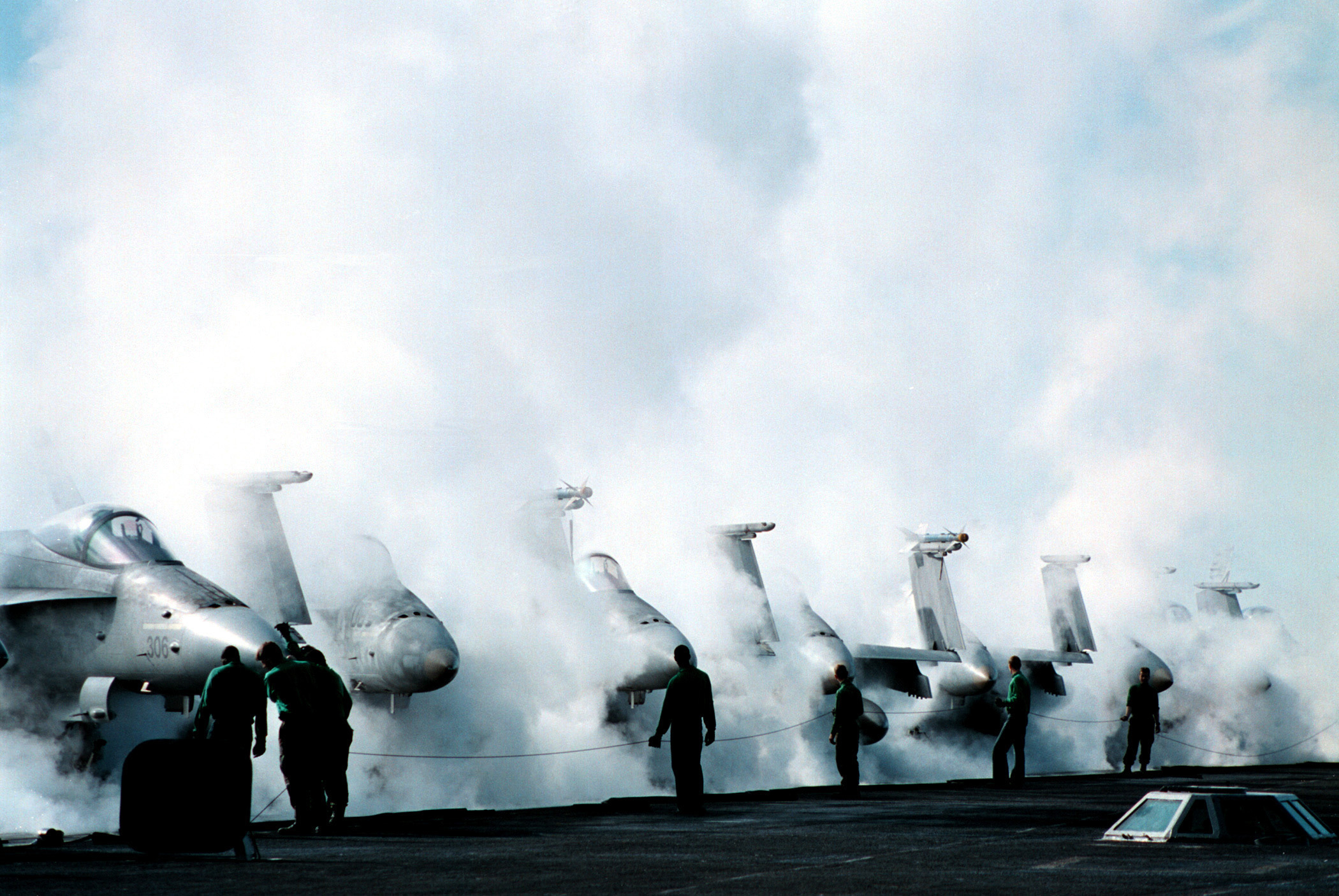
As many of you know, Boeing is about far more than just commercial aircraft as it has a large defense division as well. Its Commercial Airplanes division generated 60% of its revenue in 2018, while its Defense, Space, & Security division generated 23% of its annual revenue and its Global Services division generated 17% of its annual revenue last year (the remainder came from Boeing Capital). A recent report by the Wall Street Journal noted that Germany was considering buying 45 of Boeing’s F/A-18 fighter jets, instead of Lockheed Martin Corporation’s (NYSE:LMT) newer F-35 fighter jet offering, largely due to price. Sometimes being cost effective is more important than being new. Another positive comes in the form of the US Navy recently awarding Boeing a $2.5 billion contract for 19 P-8A surveillance aircraft.
Boeing just started delivering its KC-46 aerial refueling tanker airplane to the US government after years of delays and cost overruns. There are fixes Boeing will have to make to those KC-46’s regarding the external cameras, but those problems are more inconvenient than life threatening outside of a war zone. Here is a choice quote from Boeing on the capabilities of these new tankers which are in the process of replacing old tankers from the 1980s (or at least complementing them):
“The KC-46A Pegasus is a widebody, multirole tanker that can refuel all U.S., allied and coalition military aircraft compatible with international aerial refueling procedures. Boeing designed the KC-46 to carry passengers, cargo and patients. The aircraft can detect, avoid, defeat and survive threats using multiple layers of protection, which will enable it to operate safely in medium-threat environments.”
Final thoughts
Boeing Company helps form the backbone of America’s industrial might and has set itself up for continued growth over the years and potentially decades to come. A combination of its 2% dividend yield and ongoing share repurchases is how management is making sure investors get a share of the spoils of Boeing Company’s immense success. Thanks for reading.
Author’s note: Some of the companies mentioned above don’t trade on a major U.S. stock exchange, which come with their own unique sets of risks and rewards. Always do your own due diligence before investing.
Disclosure: I am/we are long BA. I wrote this article myself, and it expresses my own opinions. I am not receiving compensation for it (other than from Seeking Alpha). I have no business relationship with any company whose stock is mentioned in this article.
Be the first to comment